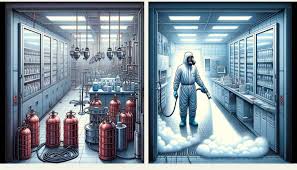
Maintaining a contamination-free environment is critical in the pharmaceutical industry, especially in cleanrooms, sterile manufacturing areas, warehouses, and microbiology laboratories. Among the most effective environmental control techniques are fumigation and fogging.
Although often used interchangeably, fumigation and fogging are distinct processes with different purposes, chemicals, and regulatory expectations. From a Quality Assurance (QA) perspective, improper execution or documentation of these activities is a frequent source of audit observations.
This article provides a detailed, practical, and GMP-aligned explanation of fumigation and fogging in pharmaceutical facilities.
1. What Is Fumigation?
Definition
Fumigation is a decontamination process in which gaseous or vapor-phase chemicals are used to eliminate microorganisms, insects, and spores from a sealed area.
It is typically used for:
-
Complete area decontamination
-
Periodic or planned microbial control
-
High-risk contamination events
Common Fumigants Used in Pharma
| Fumigant | Application | Remarks |
|---|---|---|
| Formaldehyde | Cleanrooms, warehouses | Effective but toxic; restricted use |
| Hydrogen Peroxide Vapor (VHP) | Sterile areas, isolators | Preferred modern method |
| Ethylene Oxide | Specialized applications | Highly regulated |
| Chlorine Dioxide | Large spaces | Strong oxidizer |
Key Characteristics of Fumigation
-
Requires sealed rooms
-
Longer exposure and aeration time
-
Typically performed monthly, quarterly, or during shutdowns
-
Highly effective against bacterial spores
2. What Is Fogging?
Definition
Fogging is a surface-level disinfection technique where fine droplets of disinfectant solution are dispersed into the air using fogging machines.
Fogging mainly targets:
-
Air and exposed surfaces
-
Routine microbial load reduction
-
Daily or weekly sanitation
Common Fogging Agents
| Disinfectant | Typical Concentration |
|---|---|
| Hydrogen Peroxide + Silver Ions | 6–12% |
| Quaternary Ammonium Compounds | As per SOP |
| Peracetic Acid | Low concentration |
| Phenolic Compounds | Controlled use |
Key Characteristics of Fogging
-
Does not require full sealing
-
Shorter downtime
-
More frequent application
-
Less effective against spores compared to fumigation
3. Key Differences Between Fumigation and Fogging
| Parameter | Fumigation | Fogging |
|---|---|---|
| Nature | Gas/Vapor | Liquid mist |
| Purpose | Complete decontamination | Routine disinfection |
| Frequency | Periodic | Daily/Weekly |
| Sporicidal | Yes | Limited |
| Area sealing | Mandatory | Not mandatory |
| Downtime | High | Low |
4. GMP Importance of Fumigation & Fogging
From a GMP and QA perspective, fumigation and fogging help ensure:
-
Compliance with EU GMP Annex 1
-
Control of microbial contamination
-
Maintenance of cleanroom classification
-
Protection of sterile and non-sterile products
Regulatory bodies such as US FDA, EMA, and WHO expect:
-
Scientifically justified frequency
-
Validated procedures
-
Trend-based effectiveness monitoring
5. QA Responsibilities in Fumigation & Fogging
QA plays a central role in ensuring compliance:
Before Activity
-
Approval of SOPs
-
Verification of disinfectant qualification
-
Review of safety risk assessments
-
Validation protocol approval (where applicable)
During Activity
-
Line clearance verification
-
Area segregation approval
-
Monitoring of parameters (time, concentration, temperature)
After Activity
-
Review of records and logs
-
Verification of aeration and residual limits
-
Environmental monitoring review
-
Trend analysis
6. Validation of Fumigation & Fogging
Why Validation Is Required
Regulators expect documented evidence that fumigation/fogging:
-
Reduces microbial load effectively
-
Works consistently under defined conditions
Validation Elements
-
Worst-case location identification
-
Biological indicators (e.g., Geobacillus stearothermophilus)
-
Defined acceptance criteria
-
Revalidation frequency
7. Environmental Monitoring Linkage
Effectiveness must be demonstrated through:
-
Active air sampling
-
Passive settle plates
-
Surface monitoring
-
Trend analysis before and after activity
QA should investigate:
-
Repeated excursions
-
Loss of disinfectant effectiveness
-
Improper execution
8. Common QA Audit Observations
Inspectors frequently cite:
-
Lack of validation or outdated validation
-
Undefined fumigation frequency
-
Poor documentation or missing logs
-
No rotation of disinfectants
-
Inadequate aeration and safety controls
-
No trending of EM data
9. Safety Considerations
Safety is non-negotiable:
-
PPE compliance
-
Access restriction during activity
-
Residual chemical monitoring
-
Proper aeration and clearance approval
-
Emergency response procedures
QA must ensure operator safety is documented and trained.
10. Best Practices & QA Recommendations
-
Use risk-based frequency, not calendar-based
-
Rotate disinfectants to prevent resistance
-
Periodically re-evaluate effectiveness
-
Integrate EM trends with disinfection strategy
-
Move toward VHP systems where feasible
-
Maintain strong documentation discipline
Conclusion
Fumigation and fogging are critical contamination control tools, but their effectiveness depends on scientific justification, disciplined execution, and strong QA oversight.
