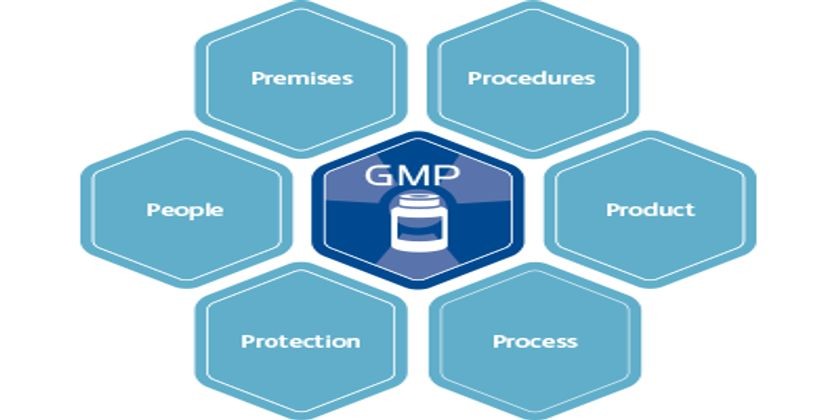
Good Manufacturing Practices (GMP) are a set of guidelines that ensure pharmaceutical products are consistently produced and controlled according to quality standards.
The main goal of GMP is to protect patient safety by minimizing risks such as contamination, mix-ups, and errors during manufacturing.
1. Quality Management System (QMS)
A strong quality system is the foundation of GMP.
-
Clear quality policies and objectives
-
Defined responsibilities and authorities
-
Continuous monitoring and improvement
Quality must be built into the process, not tested at the end.
2. Trained and Qualified Personnel
People play a critical role in GMP compliance.
-
Employees must be properly trained for their roles
-
Regular refresher training is required
-
Clear job descriptions and accountability
Untrained staff can lead to serious quality failures.
3. Premises and Equipment
Manufacturing facilities and equipment must be suitable for intended use.
-
Clean, well-maintained, and hygienic premises
-
Proper layout to avoid cross-contamination
-
Equipment must be qualified, calibrated, and maintained
4. Documentation and Record Keeping
“If it is not documented, it did not happen.”
-
Written procedures (SOPs) for all activities
-
Accurate batch manufacturing records
-
Controlled documents with version control
Proper documentation ensures traceability and accountability.
5. Production Controls
Manufacturing must follow approved procedures.
-
Use of approved raw materials
-
In-process controls and checks
-
Prevention of mix-ups and contamination
Consistency is key to producing safe medicines.
6. Quality Control (QC)
Quality Control ensures products meet specifications.
-
Testing of raw materials, intermediates, and finished products
-
Stability studies
-
Approval or rejection of materials and batches
No product should be released without QC approval.
7. Validation and Qualification
Processes must be proven to work consistently.
-
Process validation
-
Equipment qualification (IQ, OQ, PQ)
-
Cleaning validation
Validation provides confidence in product quality.
8. Hygiene and Sanitation
Maintaining cleanliness is essential.
-
Personal hygiene requirements
-
Cleaning and sanitation procedures
-
Pest control programs
Poor hygiene can cause contamination and product recalls.
9. Change Control and Deviations
Any change must be properly evaluated.
-
Formal change control system
-
Investigation of deviations
-
Root cause analysis and corrective actions (CAPA)
Controlled changes prevent unexpected quality issues.
10. Self-Inspection and Audits
Regular checks ensure ongoing GMP compliance.
-
Internal audits and self-inspections
-
Identification of gaps
-
Implementation of corrective actions
Continuous monitoring keeps systems compliant.
